
 Ayan
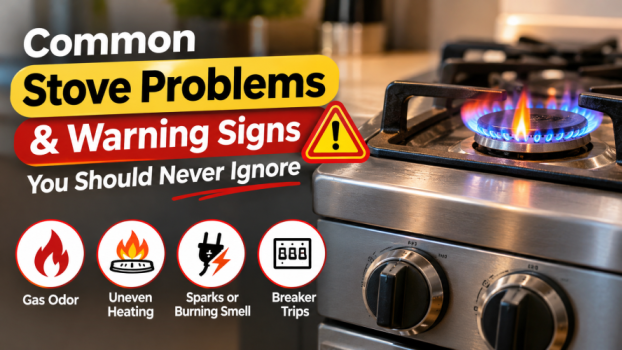
A burner that takes longer to heat or controls that respond inconsistently can interrupt a meal. Some symptoms arise from a setting or routine cleaning issue, while others signal a hazard. The first step is to recognize what changed and stop using the stove when continued operation may be unsafe.
Early Signs That a Stove Is Not Operating Normally
A burner may fail to heat, heat unevenly, or cycle in an unfamiliar way. On gas models, ignition behavior can change; on electric models, a control may stop responding or an error message may persist. Record the affected burner, the selected setting, and whether the problem occurs every time.
Food spills on accessible burner surfaces may interfere with normal operation. Once the appliance has cooled, clean only the areas identified in the owner’s instructions. If the issue returns, an inspection is more useful than repeated attempts to start the burner.
Problems That Require Immediate Attention
Gas Odors and Unusual Burner Flames
A gas smell or suspected leak requires immediate action. Leave the affected area and contact the gas utility or emergency services from a safe location. Do not operate electrical switches, light a flame, or try to locate the leak yourself.
An unusual flame may indicate a burner or combustion problem, although appearance alone does not identify the cause. Stop using the affected burner and arrange a qualified inspection. If there is a gas odor, follow the emergency steps rather than remaining nearby to investigate.
Electrical Smells, Sparks, or Repeated Breaker Trips
A burning electrical odor or visible sparking is a reason to stop using the stove. If it is safe to do so without approaching a hazard, disconnect power using an accessible means; seek qualified help. Do not repeatedly reset a breaker that trips. That can mask a fault and expose the circuit to further stress.
Warning signs to report include:
- a new burning smell or visible sparking;
- an unusual flame or gas odor;
- a breaker that trips again after a reset;
- an error message or control failure that keeps returning.
The service provider needs the circumstances as well as the symptom. A smell noticed when a particular burner is selected is different information from a problem affecting the entire appliance.
What Can Cause Inconsistent Stove Performance?
Electric heating elements, sensors, controls, and connections can all affect temperature. Gas appliances have their own ignition and burner systems. Food residue or a misplaced removable cap may be relevant in some cases, but similar symptoms can arise from faults that are not visible from outside.
Avoid replacing a component solely because it resembles a problem described online. Safe electrical and gas checks require appropriate equipment and training. A clear account of the sequence of events is more useful than an unverified diagnosis.
A technician may also ask whether the issue began after cleaning or a power interruption. The timing can help narrow the inspection, but it cannot establish the cause on its own. Keep the appliance model number and any error code available when making the appointment.
When to Schedule Professional Stove Service
For a recurring fault, qualified stove repair can establish what is wrong before a part is ordered. Provide the model number, fuel type, affected burner, error message, and whether any smell or noise accompanied the problem.
Before approving work, ask for an explanation of the fault and the expected total cost:
- which component or connection needs attention;
- whether the estimate includes labor and parts;
- whether the required part is available;
- what warranty applies to the work.
The answers help compare repair with replacement. Until a safety-related fault has been assessed and corrected, keep the affected appliance out of use.
Conclusion
A stove that heats unevenly, struggles to ignite, or responds poorly to its controls may be showing signs of a developing problem. While some minor issues can be linked to cleaning or normal use, others may point to electrical or gas-related faults that need professional attention.
Pay attention to unusual smells, visible sparks, repeated breaker trips, and changes in burner performance. Stop using the appliance if you notice a potential safety hazard. Never attempt to diagnose or repair gas and electrical components yourself.
If your stove continues to malfunction, arranging professional stove repair can help identify the cause and prevent further problems. A timely inspection can also help you decide whether repairing the appliance is a better option than replacing it. Most importantly, never compromise on safety just to keep your kitchen running.
FAQs
What are the most common signs of a faulty stove?
Common signs include burners that fail to heat, uneven cooking temperatures, delayed ignition, unresponsive controls, unusual smells, and recurring error messages. These symptoms may indicate a cleaning issue or a problem with an internal component.
Why is my stove burner not heating properly?
A burner may not heat properly because of a faulty heating element, damaged connection, control problem, or burner-related issue. On some models, food residue or an incorrectly positioned removable burner cap may also affect performance. Check the manufacturer’s cleaning instructions and arrange professional service if the problem continues.
Is it dangerous to use a stove that smells like gas?
Yes. A gas smell may indicate a leak and should never be ignored. Leave the affected area immediately and contact your gas utility or emergency services from a safe location. Do not operate electrical switches, light matches, or try to locate the leak yourself.
When should I call a professional for stove repair?
Call a qualified technician when your stove repeatedly fails to heat, has faulty controls, displays recurring error codes, or shows signs of electrical or burner problems. For gas odors, visible sparks, or burning electrical smells, stop using the appliance and follow the appropriate safety steps immediately.
Is it better to repair or replace a faulty stove?
The decision depends on the appliance’s age, condition, repair cost, and availability of replacement parts. A minor fault may be worth repairing, while frequent breakdowns or expensive component failures may make replacement a better choice. Ask a qualified technician for a clear estimate before making your decision.


